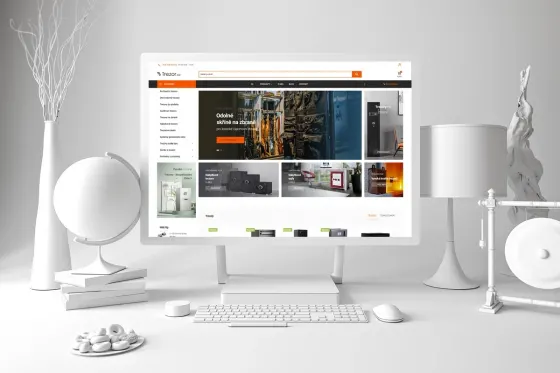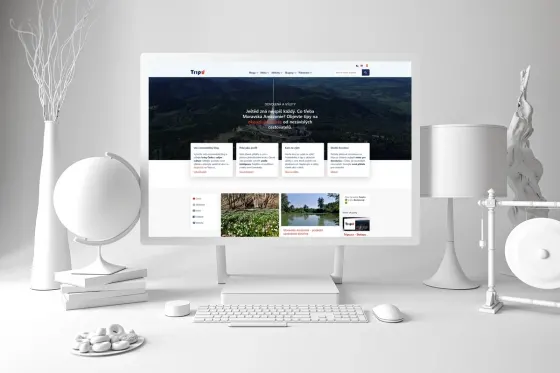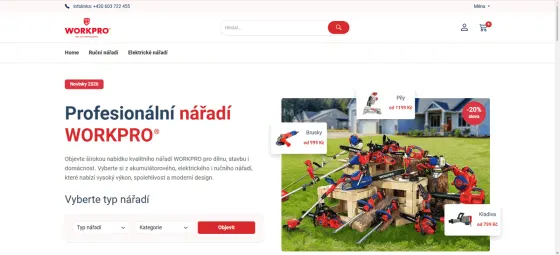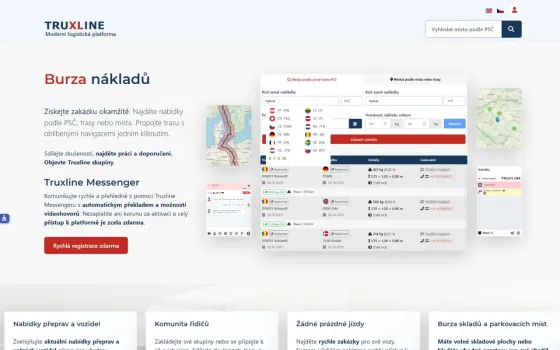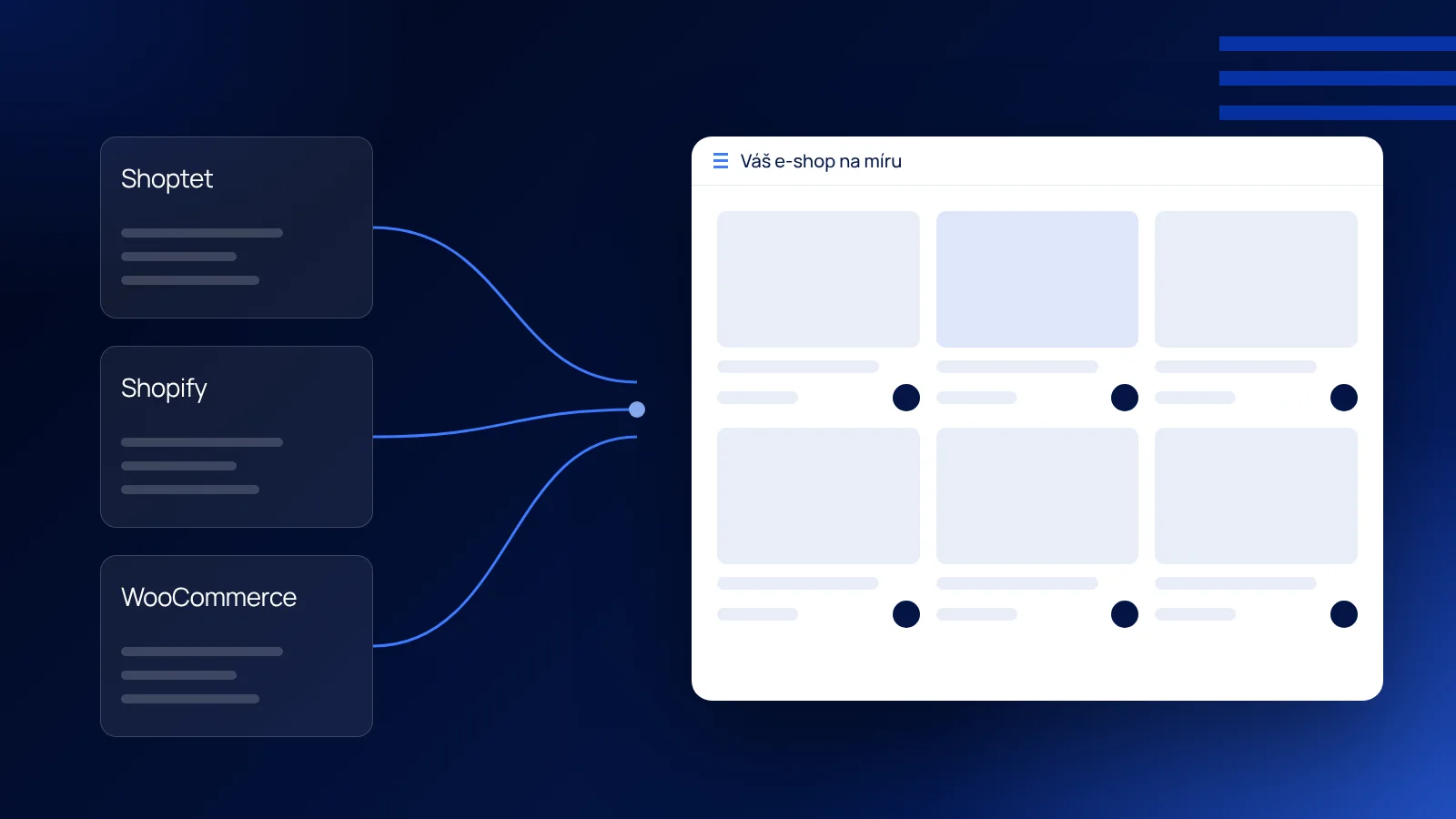
Shoptet, Shopify and WooCommerce are great for getting started. But as your online shop grows, you start paying for add-ons, working around limitations and re-entering data by hand. We move you to your own custom online shop so that neither your customers nor Google notice anything except a better shop.
The off-the-shelf ceiling
When a rented online shop is no longer enough
Most companies do not switch because of one flaw. They switch when small limitations add up and start holding back growth. These are the signs:
- Every new feature means another add-on and another monthly fee.
- B2B price lists, selling by the carton or individual discounts are handled manually.
- Orders and invoices are re-typed into your ERP or accounting system.
- Supplier ranges and prices are updated in spreadsheets.
- The template cannot do what your brand or industry needs.
- The shop slows down as the catalogue grows.

Where we migrate from
Shoptet, Shopify, WooCommerce
Each platform has its own reasons why companies leave it, and its own way of getting the data out.
Shoptet
A Czech platform with a wide range of add-ons. Companies leave it when they need their own B2B logic, ERP integration beyond the add-ons on offer, or a design free from template limitations.
We migrate products and variants, categories, customers, orders, articles and page URLs.
Shopify
A strong global platform. Apps are paid monthly, payments outside Shopify Payments carry a transaction fee, and Czech specifics such as accounting, carriers and price comparison sites require further apps.
We migrate products, collections, customers, orders, pages, the blog and redirects.
WooCommerce
An open solution built on WordPress, where functionality is assembled from plugins by different authors. As the number of plugins and the size of the catalogue grow, update conflicts multiply and the shop slows down.
We migrate products and attributes, categories, customers, orders, posts and pages.
What we migrate
Data, content and integrations
- Catalogue
- Products and variants
- Categories
- Attributes
- Images
- Manufacturers
- Stock levels
- Customers
- Accounts and addresses
- Customer groups
- Individual prices
- Newsletter consents
- Orders
- Order history
- Order statuses
- Customer purchases
- Content and SEO
- Category texts
- Articles and pages
- Meta descriptions
- 301 redirects
- Structured data
- Integrations
- Payment gateways
- Carriers
- ERP and accounting
- Price comparison feeds
- Suppliers
Process
How we migrate your shop without losing rankings
Your current shop keeps running unchanged the whole time. Customers will not notice the development, they will only see the finished new shop.
- Audit
Analysis of your current shop
We review the data, page URLs, traffic, search rankings and all integrations.
- Development
A new custom shop
We build the shop, including the features you are leaving for, and connect payments, carriers and your ERP.
- Trial
Trial data migration
We migrate the data to a test version, check it together with you and fix any discrepancies.
- SEO
Redirects and metadata
We redirect every old URL to its new one and carry over titles, descriptions and category texts.
- Launch
Go-live switchover
We add the orders and customers from switchover day and point the domain to the new shop at the time of lowest traffic.
- Monitoring
Post-launch monitoring
We watch error pages, rankings, feeds and orders, and respond immediately to any unexpected discrepancies.
SEO
Where traffic gets lost in a migration
A drop after migration is almost never caused by the new system. It is caused by forgotten details.
The most common mistakes
- Old product and category URLs lead to an error page.
- Category texts and meta descriptions stay behind on the old platform.
- Feeds for the Czech price comparison sites Heureka and Zboží.cz stop working.
- Filters create thousands of new URLs that search engines index.
- The new shop is slower than the old one.
How we prevent it
- A map of all old URLs with 301 redirects to the new ones.
- Migration of titles, descriptions and category and product texts.
- Price comparison feeds ready before launch.
- Filters configured so they do not create duplicate pages.
- Speed measured before and after launch.
Price and timeline
What a migration costs and how long it takes
Price
The migration is part of developing a custom online shop, which we typically deliver for €2,800–12,000. The price depends mainly on the volume of data, the number of integrations and the features the old platform could not provide.
Timeline
We typically migrate a shop with standard features in 8–12 weeks. B2B logic, ERP and supplier integrations or a large catalogue extend the project to several months.
Frequently asked questions about moving to your own online shop
Will we lose search rankings during the migration?
Not if the migration is done properly. We redirect every old URL to its new one, carry over metadata and texts, and monitor error pages and rankings after launch. Short-term fluctuations in the first few weeks are normal. A long-term drop means an error, which we track down and fix.
Will you migrate customers including their passwords?
Accounts, addresses, groups and purchase history, yes. Platforms store passwords only as an encrypted hash, which usually cannot be transferred. We therefore send customers an email with a link to set a new password.
How long will the shop be offline?
Practically not at all. The old shop keeps selling until the switchover. We schedule the final order sync and the domain switch for the time of lowest traffic.
Do we keep our domain and email?
Yes. The domain is yours, only where it points changes. Email can stay with your current provider. If the platform manages your domain, we will help you transfer it.
Do we have to migrate everything at once?
No. We often start with the catalogue, customers and orders, and add extra features, such as a B2B section or a loyalty programme, after launch.
Which system do you migrate the shop to?
To a custom online shop built on the open-source Joomla system. You pay no licence fees, the administration is available in your language, and the source code and data belong to you. Custom online shop