
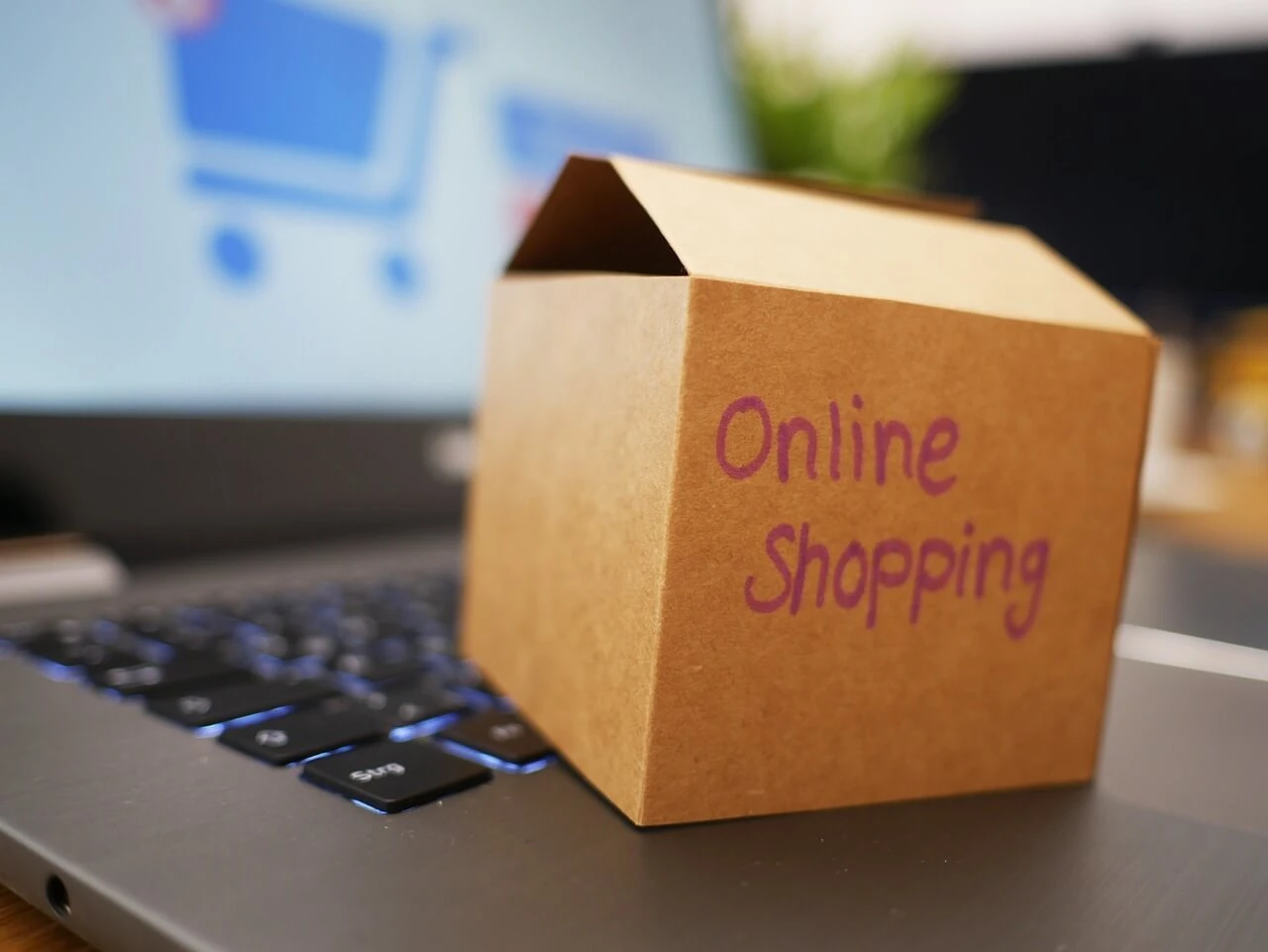
Building an online shop is today a key step for anyone who wants to start their own online business and succeed in the ever-growing Czech market, which this guide takes as its example. Whether your goal is selling your own products, dropshipping or building a strong brand, setting up your online shop effectively is the foundation of future success.
You may be asking yourself: "How do I start an online shop if I am not a programmer?" or "How much will building an online shop cost me?". There is no need to worry. Creating a fully functional, professional online shop is easier and more affordable today than ever before.
This detailed guide walks you through the whole process of building an online shop from A to Z. We will look at concrete steps, compare the most popular solutions on the Czech market, from renting a ready-made shop (a so-called hosted or "boxed" solution) to building a custom online shop, and advise you on what to watch out for.
The Czech e-commerce market is lively and still growing. Czechs are among Europe's champions of online shopping, and the pandemic amplified this trend further. Although the pace of growth has stabilised slightly after the boom, total sales still run to hundreds of billions of Czech crowns a year. That represents enormous potential for new and existing players alike.
Let us look at the steps that await you on the road to your own online shop, the costs you need to budget for and where you can pick up the knowledge you need.
How to start building an online shop and what you need to set one up
1. Find your product
What will you sell in your online shop? That is the fundamental question. You can go down the route of selling your own handmade products, reselling goods from suppliers (so-called dropshipping) or selling goods under your own brand. The important thing is to stand out. Do not try to compete with big players such as Alza, the largest Czech online retailer, across the whole breadth of their range. Instead, focus on a specific area, whether that is hand-sewn dog outfits, specialised sports equipment or speciality coffee from a local roastery. Analyse the competition and the demand, and find a gap in the market.
2. Choose a business model and decide how you will sell
The Czech e-commerce market is full of opportunities, but also of strong competition. The key to success is not just a great product but also the right business model, one that matches your resources, goals and range. Think about how your goods will get from the manufacturer to the customer. This fundamentally affects your initial investment, logistics and marketing.
First, decide how you will source and distribute your goods:
- Selling your own products (the D2C, Direct to Consumer, model): Are you a maker, designer or craftsperson? This model is ideal for you. You sell your products directly to end customers without any intermediaries. You build your own brand and have full control over quality and communication. Examples include selling hand-sewn handbags, artisan ceramics or local delicacies.
- Reselling goods (wholesale): The classic model, where you buy goods in larger quantities from a manufacturer or distributor at wholesale prices and then sell them to customers with a margin. It requires a higher initial investment in stock and a logistics solution.
- Dropshipping: A very popular model for beginners because it requires almost no initial investment in goods. It works simply: the customer orders in your online shop, you forward the order to your supplier (manufacturer, wholesaler), and they ship the goods directly to the customer. Your profit is the difference in price. The disadvantages are lower margins and less control over stock availability and delivery quality.
- Own brand (private and white label): Do you want to sell products under your own name but have no production of your own?
- White label: You buy finished, unbranded ("white") products and add your own logo and packaging. It is a fast route to your own brand.
- Private label: The manufacturer creates a product tailored exactly to your specifications. It is a more demanding process, but the result is a unique product that nobody else offers.
- Subscription model: An increasingly popular model that gives you a regular income. Customers subscribe to regular deliveries of products. In the Czech Republic this model works brilliantly for things like fresh vegetable boxes, speciality coffee, pet food or cosmetics packages.
Once you are clear on how you will source your goods, define who you will sell to. Your online shop will most often fall into one of these models:
- B2C (Business-to-Customer): The most common model, where a company sells directly to end consumers. The vast majority of Czech online shops belong here.
- B2B (Business-to-Business): Your customers are other companies. These are often repeat orders and larger volumes. Examples include selling office supplies, professional tools or specialised software.
- C2C (Customer-to-Customer): Not a classic online shop but selling through an online marketplace where consumers sell goods to other consumers. In the Czech Republic typical examples are platforms such as Aukro, Vinted or Fler for handmade goods. For a beginner this can be a great way to test demand for your goods at minimal cost.
- C2B (Customer-to-Business): A less common model in e-commerce, where an individual offers their products or services to companies. Examples are freelancers (graphic designers, copywriters) offering their services through various portals.
3. Put together a business plan that actually helps you
The words "business plan" can sound daunting and conjure up a fifty-page document for the bank. Forget that. For building your online shop, think of the business plan more as a clear timetable or a recipe book for your business. It is a tool primarily for you: it will help you organise your thoughts, uncover weak points and avoid expensive mistakes right at the start.
You do not need complicated software, a text document or a simple spreadsheet will do. Use it to answer the following important questions:
1. What exactly is my idea?
- What am I selling and to whom? Describe the core of your online shop in one or two sentences. (For example: "I sell handmade leather wallets for men who care about quality and design.")
- What makes me unique? Why should people buy from you rather than from the competition? Is it a better price, unique design, outstanding customer service, delivery speed or the story of your brand?
2. Market and competitor analysis
- Who are my main competitors in the Czech Republic? List 3 to 5 main competitors. Go through their online shops.
- What do they do well and what do they do badly? Note their prices, photo quality, social media activity and customer reviews. Where are the weaknesses you can exploit?
- Who is my ideal customer? Do not try to sell to everyone. Define your target group. Are they young mothers, athletes, design lovers? The more specific you are, the better you will target your marketing.
3. Marketing and sales channels
- How will customers find out about me? Launching the shop is not enough. Where will you promote it?
- Price comparison sites: Will you be listed on Heureka.cz or Zboží.cz, the Czech price comparison sites?
- PPC advertising: Will you set aside a budget for search ads (Google Ads, Sklik)?
- Social media: Which networks does your target group use (Facebook, Instagram, TikTok and so on)? Will you create content or pay for advertising?
- SEO: How will you make sure your online shop can be found on Google and Seznam, the Czech search engine?
4. Operations and logistics
- Where will I get my goods? (Own production, supplier, dropshipping, see step 2.)
- Where will I store the goods? At home in the garage, or will I rent a small warehouse?
- How will I pack and ship? What packaging will I use? Which carriers will I sign a contract with? (Zásilkovna, PPL, Česká pošta and Balíkovna are the standard in the Czech Republic.)
5. Finances. Be realistic
- Start-up costs: Add up everything you need to get started. (Trade licence fee, building the online shop, buying the domain, the first purchase of goods, packaging, printer, marketing for the first month.)
- Regular (monthly) costs: How much will it cost to run? (Subscription for the e-commerce platform, accountant, marketing, restocking.)
- Pricing: How will you set product prices so that you cover all costs and VAT and still have a profit left over?
- Break-even point: Try to estimate how many products you need to sell to "break even" and start making money.
4. Build a strong brand
Creating a strong brand is absolutely essential for your white-label online shop. It is not just about a name and a logo but about an overall identity that sets you apart from the competition and resonates with your customers.
Choosing a company name
Consider your company name carefully. It should be:
- Original and memorable: Avoid generic names that blend into the crowd.
- Clear: The name should clearly communicate what your company offers, or at least evoke the right association.
- Available: Before you settle on a name, check the availability of the domain (.cz as well as .com if you plan to expand internationally) and of usernames on social media (Facebook, Instagram, TikTok and so on), and carry out a preliminary check that the name is not already legally registered with the Czech Industrial Property Office (ÚPV).
- Works globally: If you are considering selling abroad, make sure the name does not carry negative connotations or prove hard to pronounce in other languages.
Visual identity and branding
Once you have a name, it is time to get to work on the visuals. They form the foundation of your brand:
- Logo: Design a professional, modern logo that will represent your brand. It should be versatile and look good across different platforms.
- Packaging visuals: If you will be offering physical products, invest in attractive, consistent packaging design.
- Web design: The look and feel of your online shop matters. Make sure the site is visually appealing, easy to use and reflects your brand.
- Marketing materials: Create a unified visual style for all marketing materials, from advertising banners and newsletters to social media posts.
5. Registering a business for your online shop in the Czech Republic
Before you start building your online shop and selling, you must have a properly registered business in the Czech Republic. The choice of legal form has a fundamental effect on your liability, taxes and administration. Consider the following options:
Trade licence (OSVČ, the Czech self-employed sole trader)
This is the simplest and fastest route for new entrepreneurs and for building an online shop.
- Advantages: Less bureaucracy, easy to set up and close down, the option of claiming flat-rate expenses.
- Disadvantages: You are liable with all of your personal assets.
- How to do it: You obtain a trade licence at any trade licensing office.
Limited liability company (s.r.o.)
If you plan larger sales volumes or want to separate personal and company assets, an s.r.o. (the Czech limited company) is the more suitable choice for your online shop.
- Advantages: Liability is limited to the amount of the shareholder's unpaid contribution (in practice usually up to the amount of the share capital), and a better image with partners and potential investors.
- Disadvantages: More complex set-up and a higher administrative burden (bookkeeping), and the share capital must be paid up (although it can be as little as CZK 1).
- How to do it: Incorporation is done through a notary and registration in the Commercial Register.
Taxes and VAT
When running an online shop in the Czech Republic it is essential to understand your tax and VAT obligations:
- Income tax: As a sole trader you pay personal income tax; an s.r.o. pays corporate income tax.
- VAT registration: You become a VAT payer as soon as your turnover for the previous 12 consecutive calendar months exceeds CZK 2,000,000 (roughly €80,000). You can also register voluntarily, which can be advantageous if you buy goods or services subject to VAT. For an online shop that sells internationally, VAT registration is often required earlier.
We recommend discussing your specific situation with a tax adviser. They will help you choose the most suitable legal form and set up the right processes for bookkeeping and taxes.
6. Create and populate your online shop
Your online shop is the heart of your online business, and its creation and optimisation are decisive for success. Let us look at the most important aspects.
Choosing and setting up an e-commerce platform
Choosing the right platform for building your online shop is essential. Each has its strengths and suits a different type of entrepreneur and business. Here are the most popular options for the Czech market:
- Shoptet: This Czech hosted e-commerce platform is ideal for beginners and advanced users alike. It offers a wide range of features, easy administration and excellent technical support in Czech. It is a great choice for those looking for a complete solution without the need for deep technical knowledge.
- Shopify: A global giant with a huge range of themes and apps. It is very user-friendly and allows you to launch an online shop quickly. Expect higher monthly fees, however, and support in English.
- WooCommerce (for WordPress): If you already have a WordPress website or are more technically skilled, WooCommerce is a powerful and flexible plugin. It offers enormous customisation options and is free (you pay only for hosting and any premium add-ons).
- Other options: For specific or very large projects you can consider solutions such as Magento, which offers maximum flexibility but requires considerable technical knowledge and investment in development. For medium-sized and smaller projects, Phoca Cart may be sufficient.
Comparison of platforms for building an online shop
| Platform | Platform type | Ease of use | Shop price | Hosting | Plugins |
|---|---|---|---|---|---|
| Shopify | Hosted SaaS | From €19 per month | Included | Large number | |
| WooCommerce | Open-source plugin (WordPress) | Free | Arranged by the user | Huge number | |
| Magento (Adobe Commerce) | Open-source / Enterprise | Free / higher costs (Enterprise) | Arranged by the user | Large number | |
| Joomla + Phoca Cart | Open-source CMS + online shop | Free | Arranged by the user | Modules, plugins | |
| PrestaShop | Open-source | Free | Arranged by the user | Large number | |
| Shoptet | Hosted SaaS (CZ/SK) | From €12 per month | Included | Medium number | |
| Wix | Hosted SaaS | From €11 per month | Included | Less widespread | |
| Webnode | Hosted SaaS (CZ/SK) | From €12 per month | Included | Less widespread |
After choosing a platform, start by creating wireframes (rough sketches of the page layouts) and gradually build the structure of your online shop.
The next important step is choosing a template, which determines the look and the user experience of your online shop. A good template should be responsive, optimised for fast loading and adaptable to your needs. Depending on the platform you choose, you can pick from a variety of templates, from ready-made ones to custom templates.
E-commerce platforms, templates and themes


7. Source and present your products
The success of your online shop stands or falls on your products and the way you present them.
Sourcing products and logistics
- Own production: If you make your own products, make sure you have sufficient stock and efficient production processes.
- Wholesale and dropshipping: When buying goods from wholesalers or using dropshipping, the most important thing is to set up your logistics. This covers everything from packaging and storage to delivery to the customer. Consider working with reliable logistics partners.
Presenting products for maximum conversion
High-quality product presentation is absolutely decisive for sales:
- Professional photography: Good photos from different angles and in good lighting are the absolute basics. Invest in a professional photographer or learn the fundamentals of product photography. Consider video that shows the product in action.
- Accurate, engaging descriptions: Descriptions should be concise, informative and optimised for search engines. Use the keywords your customers search for. Emphasise the benefits and the solutions the product brings, not just its features.
- Technical specifications: Provide all relevant technical specifications, size charts and other details the customer needs.
- Categories and filters: Organise products into logical categories and let customers filter easily so they can quickly find what they are looking for.
Tip for getting started: If you are unsure about promotion and winning your first customers, consider selling on established online marketplaces such as Alza Marketplace, Heureka.cz or the global Amazon. These platforms help with promotion through their algorithms and give your products immediate visibility. You can gain valuable experience and feedback before launching your own online shop.
Start small and test market interest
There is no need to stock hundreds of items straight away. If you make something yourself, for example jewellery, ceramics or candles, create an Instagram profile, add a logo and a few product photos and watch how people react. If you plan to resell goods, set yourself a clear plan: within a few weeks, buy the first products, prepare a simple online shop (for example on Shoptet, Phoca Cart or WooCommerce) and test advertising on Facebook or Seznam, say.
Try different forms of promotion
Without marketing, nobody will hear about you today. The advantage is that you do not have to spend tens of thousands. A/B testing in Google Ads or Sklik, the Czech search engine Seznam's advertising platform, will show you what works and what does not before you launch a bigger campaign.
Not sure where to start? We will gladly help you build your online shop. Whether you need a modern design, a technical solution or a complete strategy for online sales, we are here for you. Contact us and let us start building your successful online shop together.

